
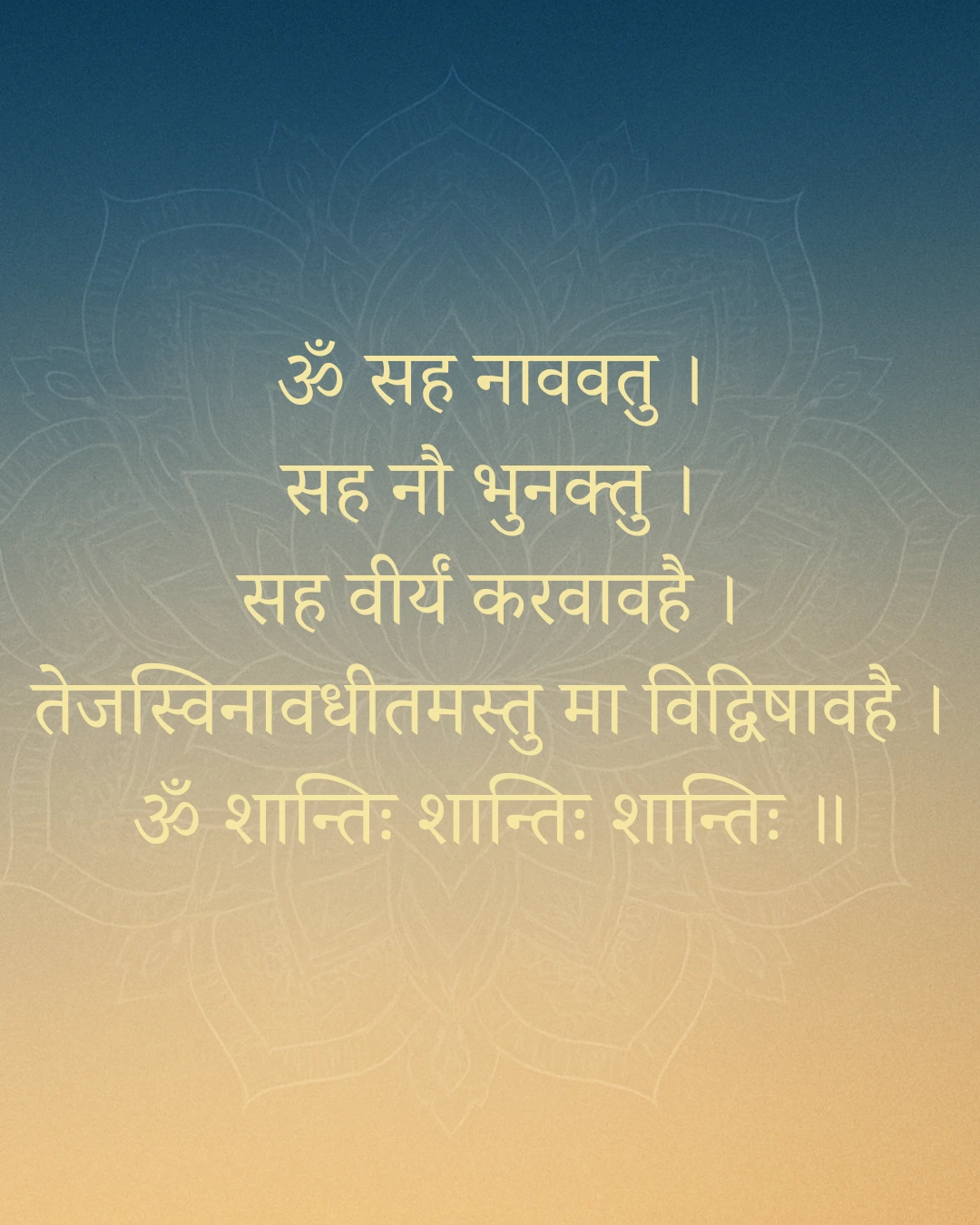
This mantra, often called the Peace Invocation, is traditionally chanted at the beginning of yoga practice in the Satyananda tradition.
It invokes harmony between teacher and student, strength for practice, and peace on all levels.
How I read it#
When English translations use “He,” I do not read it as pointing to a personal god.
In this context, the reference is neutral: the Supreme Consciousness, Brahman, the universal principle that nourishes, protects, and illuminates. You can also read the opening as:
May the Supreme Consciousness protect us both.
Line by line#
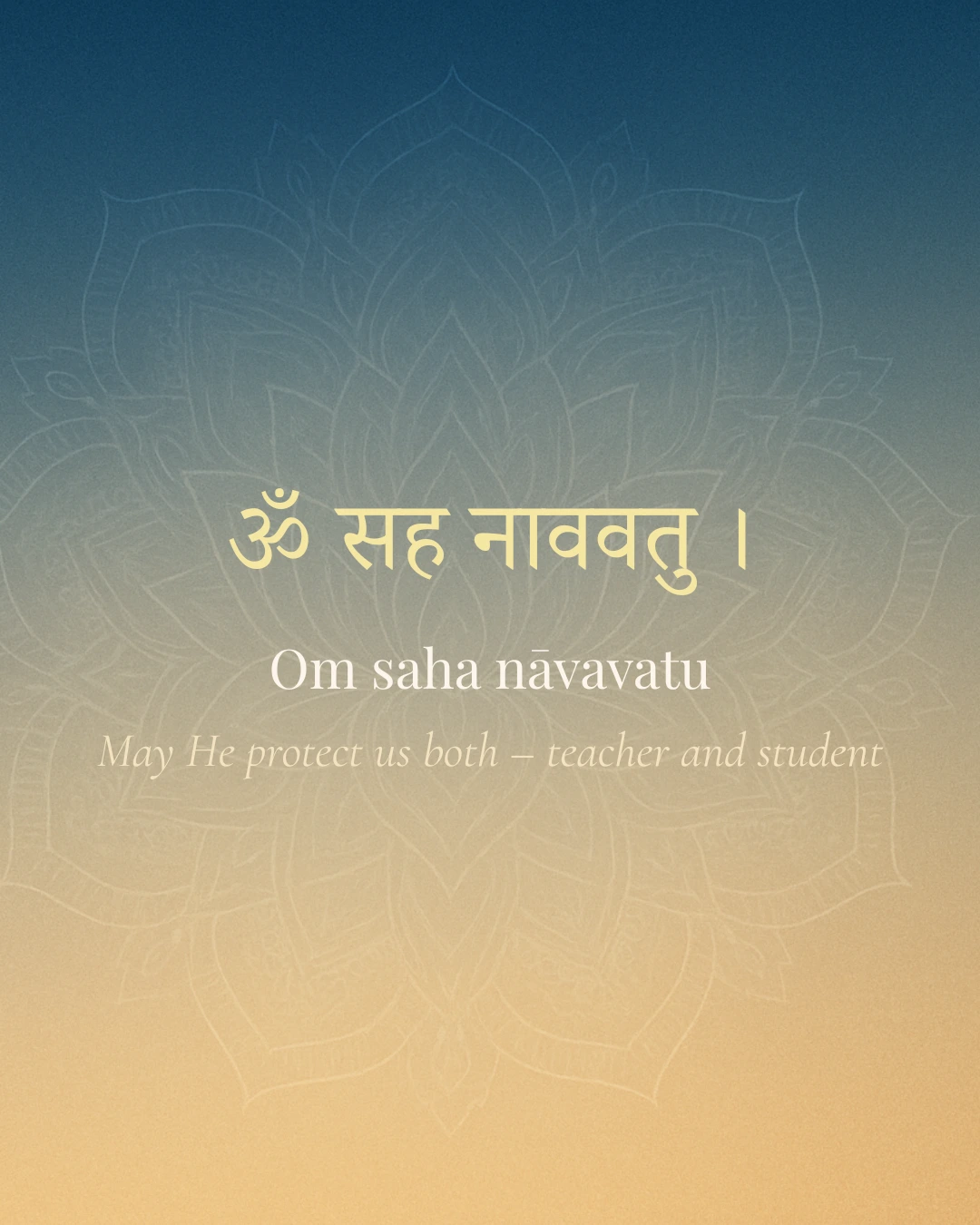
Om saha nāvavatu opens the chant as a shared request for protection. The practice is not framed as something one person owns; teacher and student enter the same field of attention.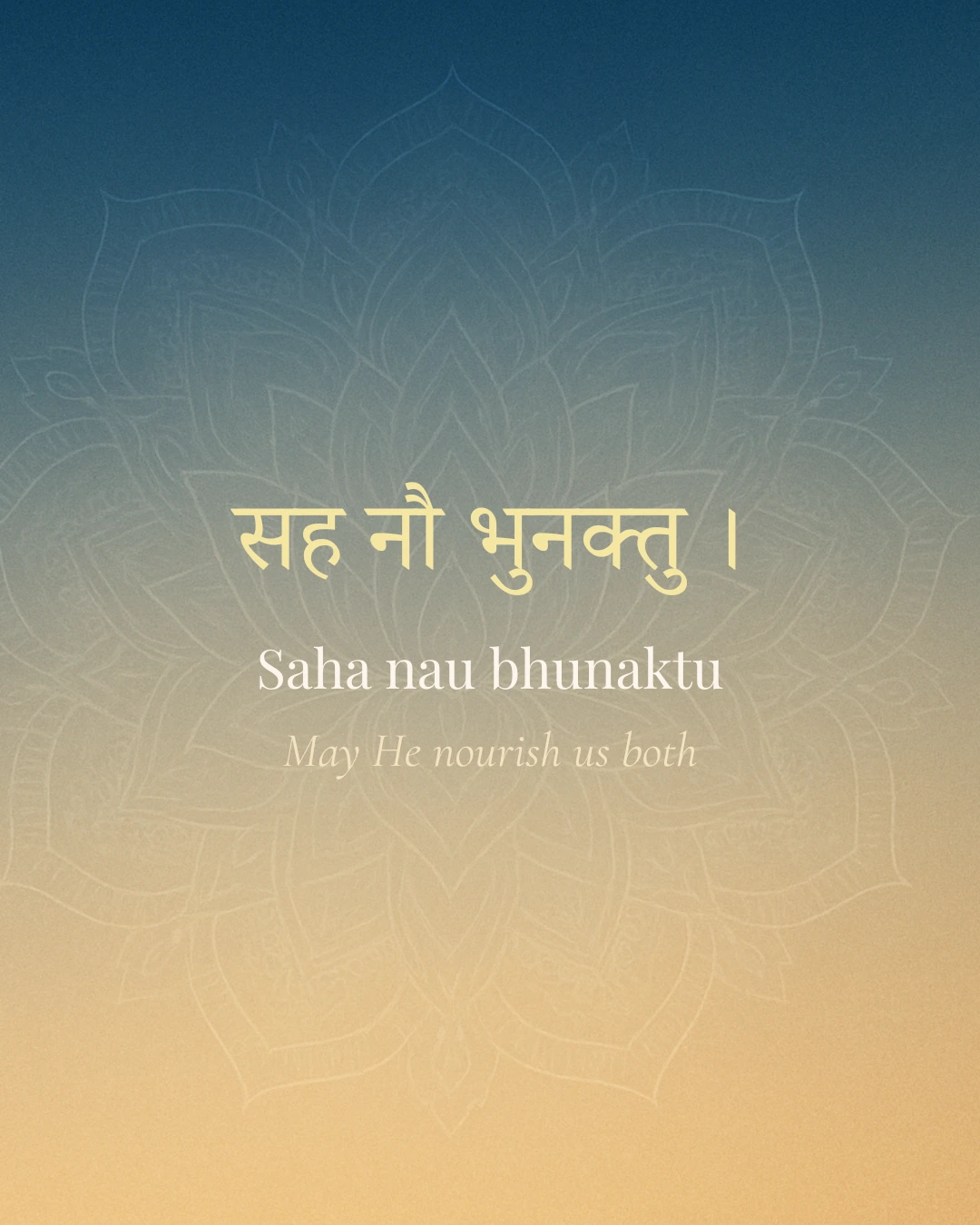
Saha nau bhunaktu asks that the practice nourish both sides of the relationship. Learning is not extraction; it should support everyone involved.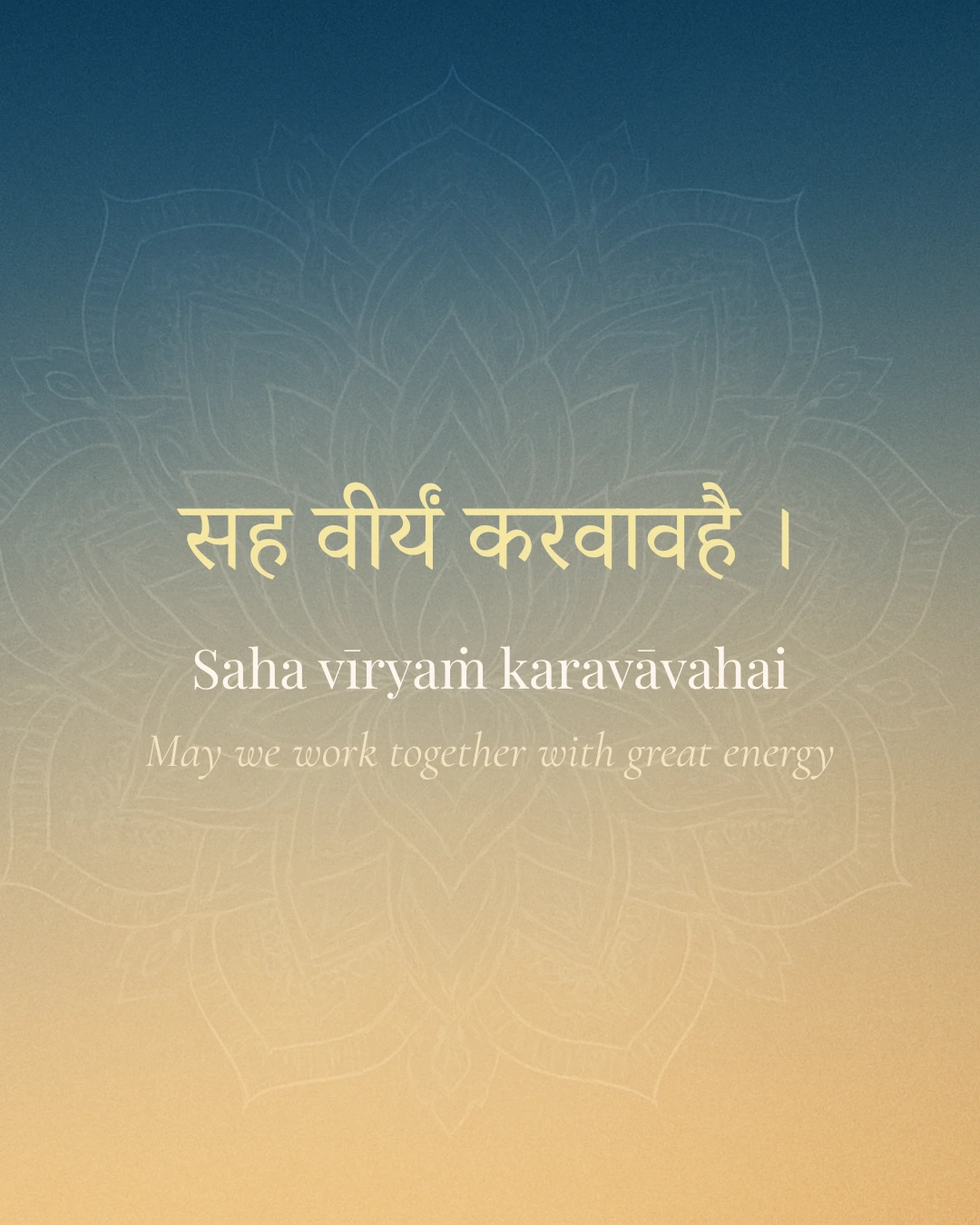
Saha vīryaṁ karavāvahai brings energy into the work. Not excitement for its own sake, but the steady strength needed to practice, study, repeat, and stay present.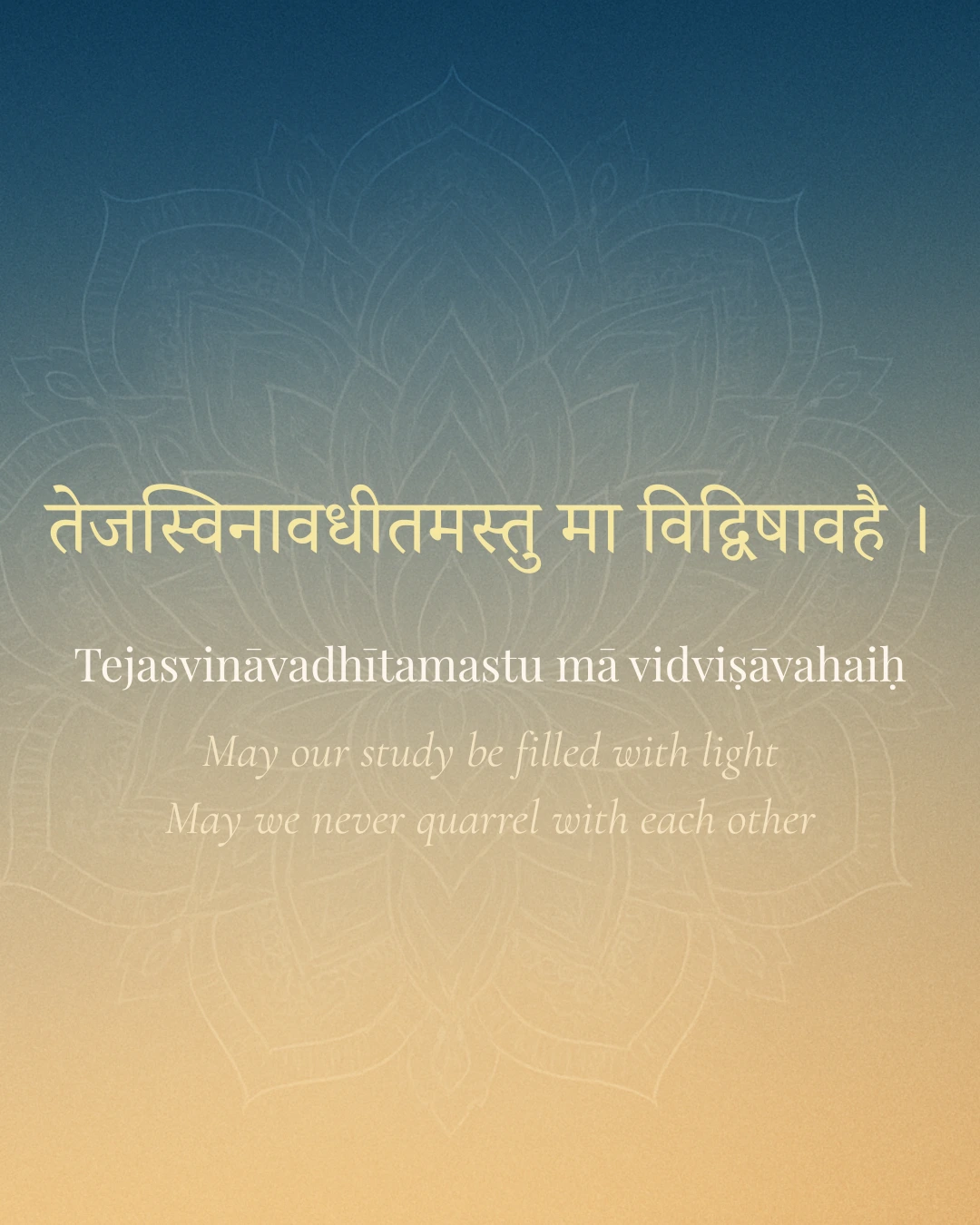
Tejasvināvadhītamastu mā vidviṣāvahaiḥ points toward clarity in study and away from conflict. For me, this is the most practical part: may the learning become bright, and may ego not turn it into friction.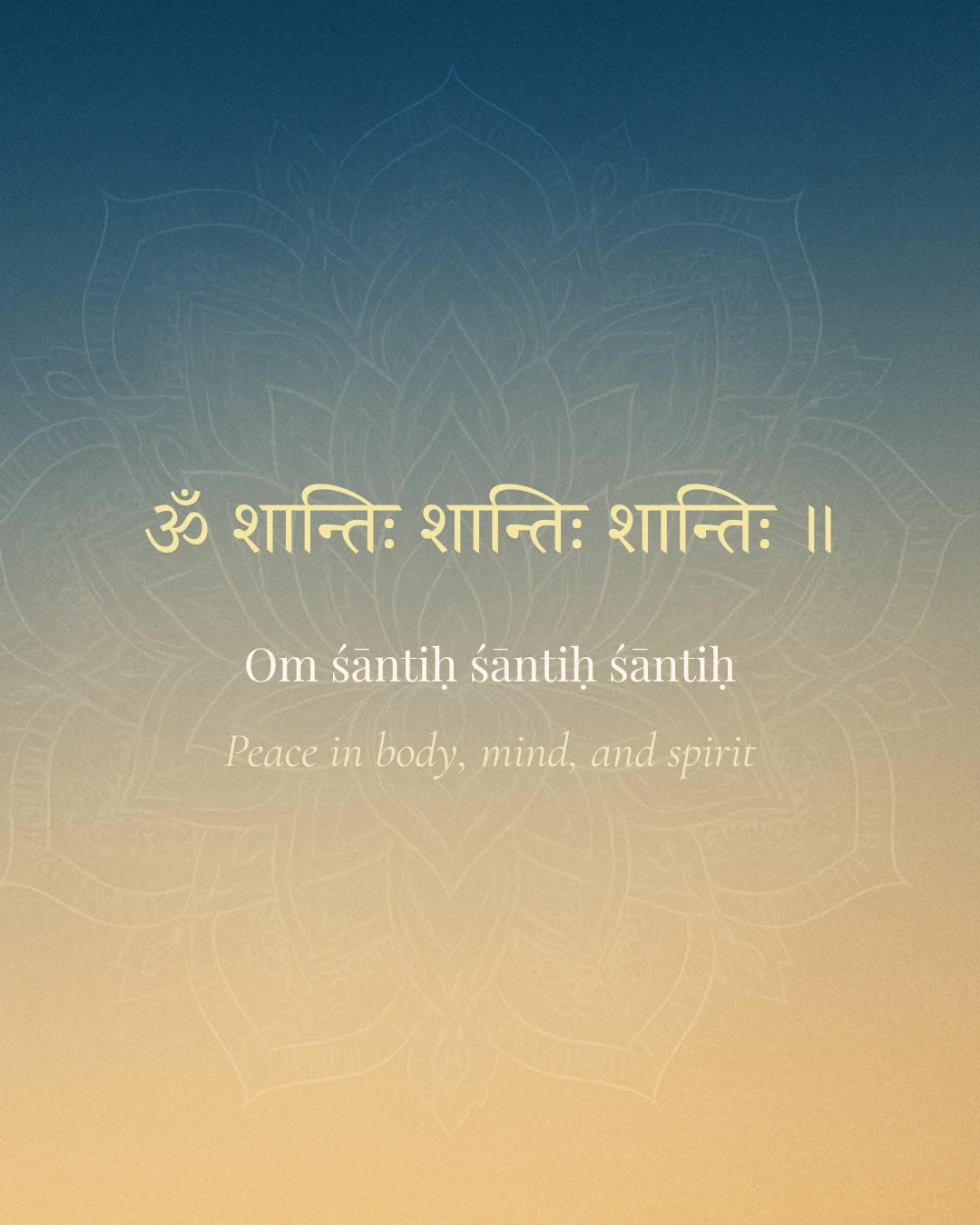
Om śāntiḥ śāntiḥ śāntiḥ closes with peace on all levels: body, mind, and spirit.Personal use#
Personally, I like to chant it silently to clear my intentions and show gratitude to whoever has been a teacher for me in that moment: in yoga, while learning a new drum pattern, during a gym workout, or even while cooking.